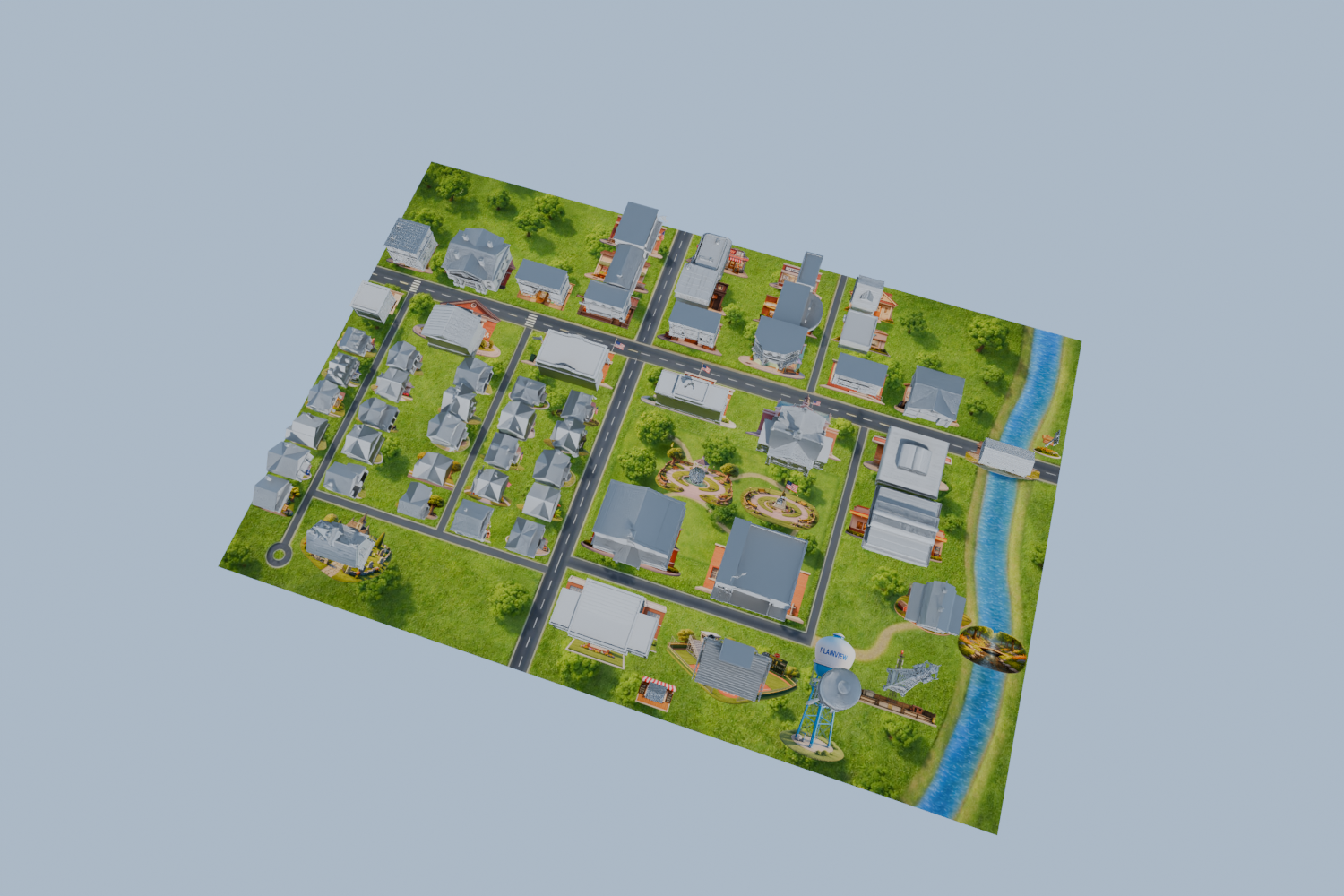
Why build it at all?
When you make an animated show, the camera needs to know where everything is. If Sam’s drone buzzes down Main Street, the bank has to stay on the left and the diner on the right — shot after shot after shot — or the town quietly falls apart. A 3D model of Plainview is the ground truth: the invisible frame the camera moves through so that every single shot agrees on where the town is and how tall the church steeple stands.
You will never see these gray buildings in a finished episode. They work backstage — keeping the camera and the whole town locked in place so the finished, painted Plainview never drifts out of position.
From a flat map to a real place
It starts with a single hand-illustrated aerial map of Plainview. Every building on that map — Frank’s Grocery, Alice’s Pharmacy, the volunteer fire department, the bowling alley with the neon sign — gets rebuilt as its own 3D model.
Then every model is dropped back onto the map at its exact coordinates, scaled and rotated to match. What you are looking at throughout this page is the 2D map and its 3D twin standing on the same patch of ground.
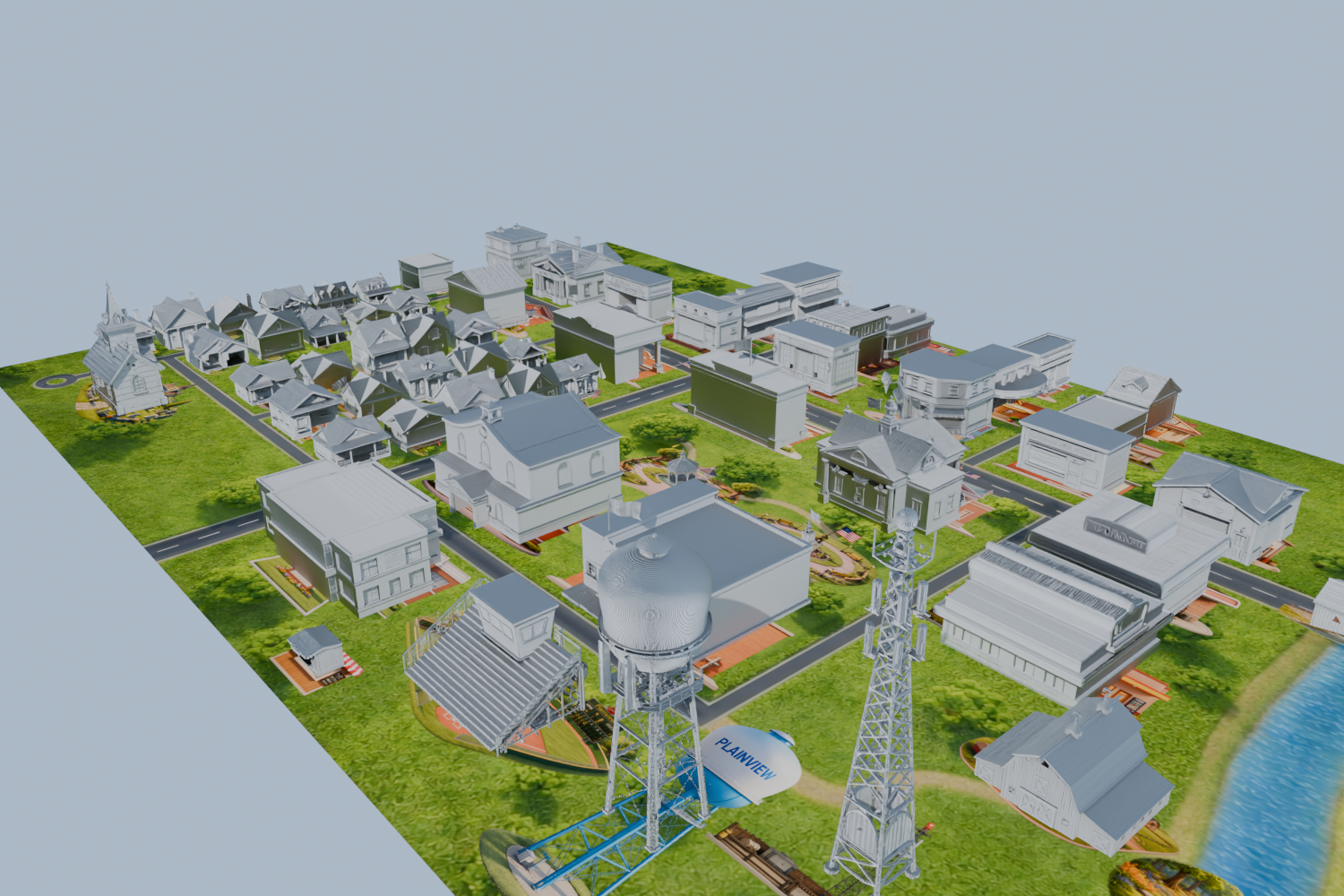
The clay stage
These flat-gray “clay” renders are what animators call the blockout — the massing and the shadows, before any color or texture goes on. It is the least glamorous stage and the most important one: get the shapes right, get the spacing right, make sure no two buildings overlap, and make sure the whole town still reads cleanly from the air, because that is exactly where the drone will fly.
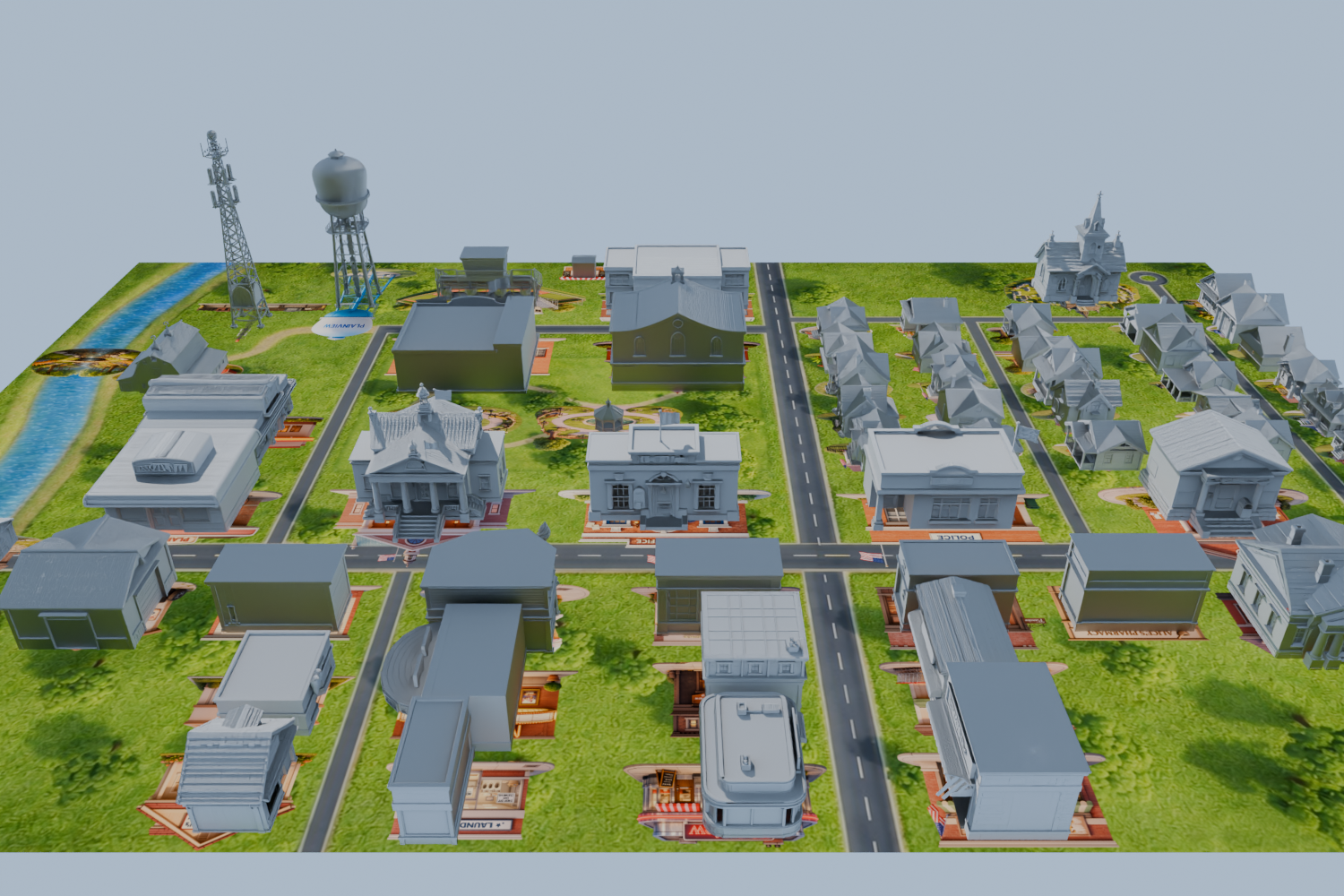
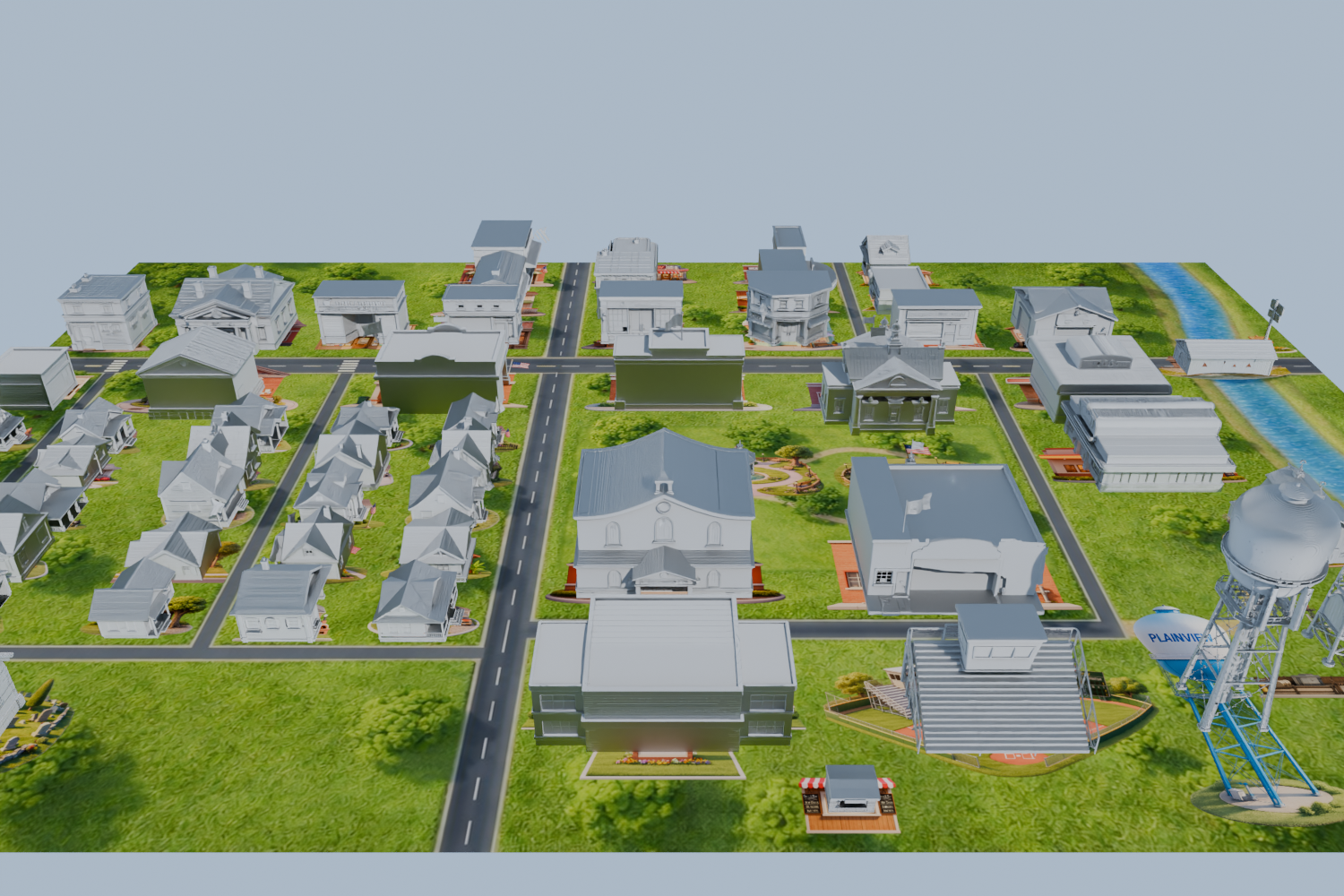
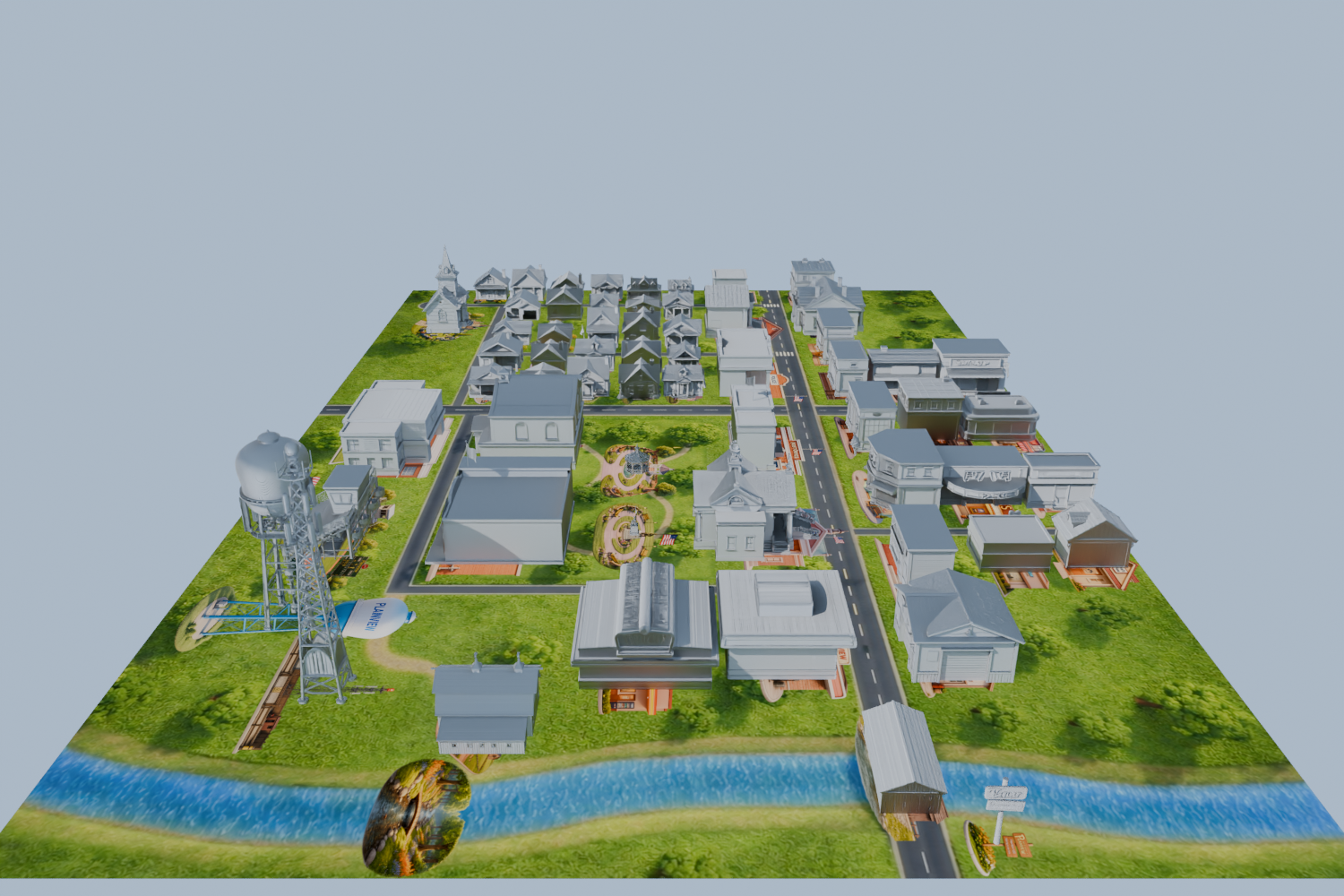
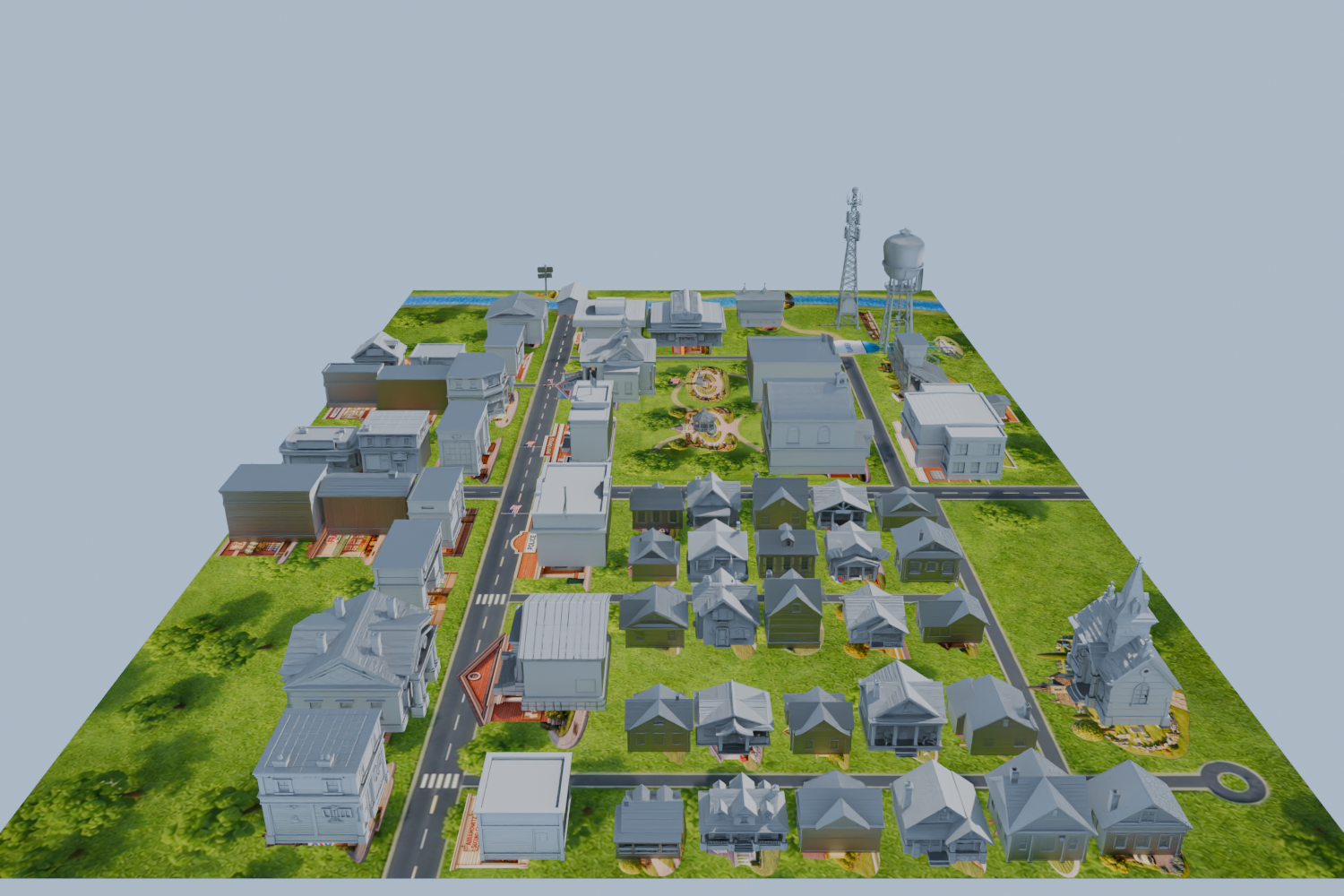
North, south, east, west — the town checked from every side so nothing looks right from one angle and wrong from another.
One person, sixty-three buildings
Every structure you see here — all sixty-three of them — was modeled, placed, sized, rotated, and rendered by one person. The houses face their streets. The civic buildings sit back off the road. The water tower stands where the water tower stands. It is a lot of quiet, unglamorous work that no viewer is ever meant to notice, which is sort of the whole point: when the backstage is built right, the town on screen just feels like a place that has always been there.
That is how Plainview gets made — a town that does not exist, built carefully enough that it might as well.